The Cost of Staying: What Manufacturers Lose When Supplier Inertia Takes Hold

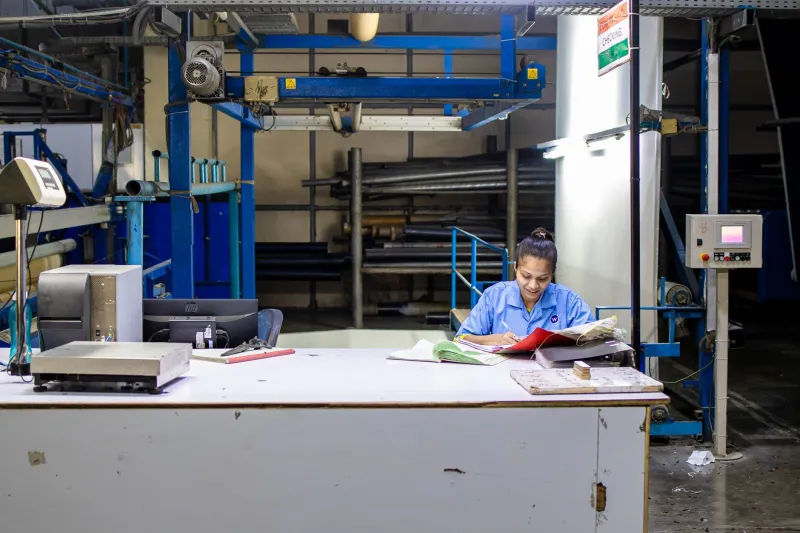
Photo by Photo by cornerstone accounting on Unsplash on Unsplash
There is a particular kind of organizational paralysis that procurement professionals rarely discuss openly: the decision to remain with a supplier not because the relationship is working, but because leaving has become too expensive to contemplate. It has no line item on the P&L. It generates no purchase order. Yet it quietly erodes margin, quality, and competitive standing with every passing quarter.
Call it supplier inertia. And in US manufacturing, it is far more prevalent than most procurement leaders care to admit.
Why Switching Looks More Expensive Than It Is
When a supplier begins underperforming—whether through missed lead times, inconsistent quality, or eroding service levels—the instinct of many procurement teams is to calculate the cost of switching and weigh it against the pain of staying. On the surface, that math often favors staying. Contract termination clauses carry financial penalties. Transitioning to a new vendor requires qualification processes, documentation, and time. Employees must be retrained on new systems, new contacts, and new workflows. In some cases, tooling or proprietary specifications are tied to the incumbent supplier in ways that make extraction genuinely complicated.
These are real costs. They should not be minimized. But they are also only half the equation.
The costs of staying with an underperforming supplier are equally real—they are simply harder to see because they accumulate gradually and rarely trigger a formal review. A supplier that delivers at a 94 percent on-time rate instead of the contracted 98 percent creates downstream disruptions that ripple through production schedules, customer commitments, and inventory buffers. A vendor whose quality reject rate creeps upward by two percentage points annually generates rework costs, waste, and potential warranty exposure that may never be traced back to the source relationship. These are not hypothetical scenarios. They are the operating reality for a significant share of mid-market manufacturers across the country.
The Structural Roots of Lock-In
Supplier lock-in rarely happens by design. It tends to emerge from a series of individually reasonable decisions that, in aggregate, leave procurement teams with very little room to maneuver.
Long-term contracts negotiated for price stability often include termination-for-convenience penalties that make early exit prohibitively expensive. Single-source arrangements—sometimes entered into because a supplier offered the best price or a specialized capability—eliminate the competitive pressure that keeps performance honest. Over time, internal processes, ERP configurations, and even informal institutional knowledge become calibrated around a specific vendor's outputs, timelines, and communication patterns. The organization, in effect, builds itself around the supplier rather than the other way around.
This dynamic is compounded by the human element. Procurement professionals who have invested years in a supplier relationship often develop a form of advocacy for that vendor, even when performance data tells a different story. Raising concerns about a long-standing partner can feel like a professional risk, particularly in organizations where relationship continuity is valued over rigorous performance management.
What Inertia Actually Costs
To understand the true economics of supplier inertia, procurement leaders need to look beyond the direct costs of switching and examine what staying is costing them on a compounding basis.
First, there is the opportunity cost of foregone market access. Supplier landscapes shift. New vendors enter markets with better technology, more competitive pricing, or superior service models. A procurement team locked into a multi-year exclusive arrangement has no ability to capture those advantages, even when they are substantial.
Second, there is the performance degradation premium. Suppliers who face no credible threat of replacement have reduced incentive to invest in continuous improvement. Over a three-to-five year contract horizon, this can translate into meaningful gaps between what a competitive vendor would deliver and what the incumbent actually provides—gaps that are rarely quantified but are nonetheless real.
Third, there is the strategic cost of inflexibility. In a market environment where supply chain disruptions have become a recurring operational challenge, the ability to pivot quickly to alternative sources is itself a competitive asset. Organizations that have allowed themselves to become structurally dependent on a single supplier are exposed in ways that more agile competitors are not.
Structuring Contracts to Preserve Optionality
The most effective response to supplier inertia is not to avoid long-term supplier relationships—those relationships, when functioning well, deliver genuine value. The goal is to structure those relationships in ways that preserve the procurement team's ability to act when circumstances change.
Several approaches have proven effective in practice.
Performance-linked contract terms replace static agreements with dynamic ones. Rather than locking in a vendor for a fixed term regardless of outcomes, these contracts tie renewal, scope expansion, or pricing to measurable performance benchmarks. When a supplier knows that continued business depends on meeting defined standards, the incentive structure changes accordingly.
Dual-sourcing strategies distribute volume across two qualified vendors rather than consolidating with one. While this approach sacrifices some economies of scale, it preserves competitive tension, reduces single-source dependency, and ensures that a qualified alternative is always available if performance deteriorates.
Exit provisions with defined triggers allow procurement teams to terminate agreements without full penalty when a supplier fails to meet specific contractual obligations. Drafting these provisions carefully—with clear, measurable thresholds and documented remediation processes—requires upfront legal and procurement effort but dramatically reduces the cost of switching when it becomes necessary.
Supplier qualification pipelines ensure that the organization always has vetted alternatives ready to engage. Many procurement teams only begin qualification processes after a problem has already emerged, which means the switching cost includes the time required to bring a new vendor up to standard. Maintaining an active pipeline eliminates that delay.
Rethinking the Switching Decision
The framing of supplier switching as an inherently disruptive and expensive event is, in many cases, a self-fulfilling prophecy. Organizations that have invested in performance management infrastructure, maintained dual-source relationships, and built exit flexibility into their contracts find that switching—when necessary—is operationally manageable and financially defensible.
The procurement leaders who navigate this most effectively are those who resist the instinct to treat a long-standing supplier relationship as an asset in its own right. Relationships are valuable when they are producing value. When they are not, the relationship itself is the liability.
For manufacturers seeking to evaluate their current supplier portfolio with greater clarity, platforms designed for B2B procurement can provide access to qualified alternatives, market benchmarks, and the vendor discovery capabilities that make switching a strategic option rather than a last resort. The goal is not to change suppliers frequently—it is to ensure that the organization always retains the ability to do so when the situation demands it.
Inertia is not loyalty. And in a competitive manufacturing environment, the cost of confusing the two is one that compounds quietly, quarter after quarter, until it becomes impossible to ignore.